Joe Sacco is a pivotal figure, bridging journalism and comics. His groundbreaking work, particularly Palestine, redefined reportage.
He’s known for immersive, on-the-ground reporting, meticulously documented in a comic book format.
Sacco’s influence extends beyond the artistic realm, impacting how stories of conflict and human experience are conveyed.
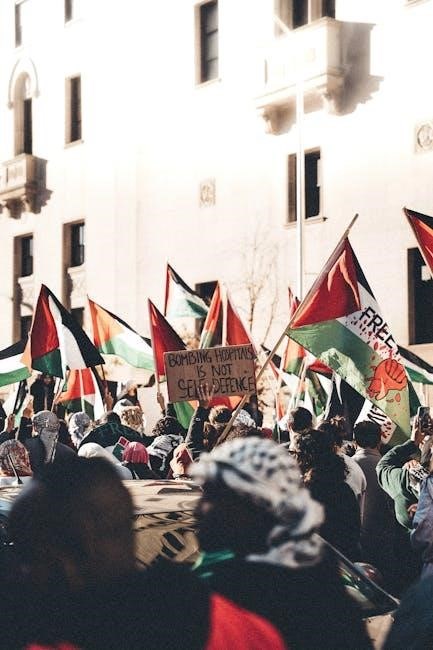
Historical Context: The First Intifada
The First Intifada (1987-1993) serves as the crucial backdrop for Joe Sacco’s Palestine. This Palestinian uprising against Israeli occupation erupted in the Gaza Strip and quickly spread to the West Bank. It wasn’t a centrally organized movement, but rather a spontaneous outburst of frustration stemming from decades of Israeli control, economic hardship, and a lack of political progress towards self-determination.
Prior to the Intifada, the occupied territories experienced increasing tensions. Israeli settlements continued to expand, displacing Palestinians and exacerbating land disputes. The economic situation deteriorated, with high unemployment rates and limited opportunities for Palestinians. The Palestine Liberation Organization (PLO), led by Yasser Arafat, operated primarily from exile, and internal Palestinian political structures were suppressed by Israeli authorities.
The immediate trigger for the Intifada was a traffic accident in Gaza where an Israeli truck collided with a civilian vehicle, resulting in Palestinian deaths. This incident fueled existing resentment and sparked widespread protests, initially involving stone-throwing by Palestinian youth against Israeli soldiers. The Intifada quickly escalated into a more sustained and multifaceted resistance movement, encompassing strikes, boycotts, and civil disobedience.
Israel responded with a combination of military force and attempts to suppress the uprising through administrative measures. The period was marked by violence on both sides, with significant casualties among Palestinians and Israelis. The First Intifada ultimately led to the Oslo Accords in the early 1990s, which initiated a peace process aimed at resolving the Israeli-Palestinian conflict, though lasting peace remains elusive. Sacco’s work captures the raw realities of life during this tumultuous period.

Sacco’s Methodology: On-the-Ground Reporting
Joe Sacco’s distinctive approach to journalism centers on immersive, on-the-ground reporting. Unlike traditional war correspondents who often operate from a distance, Sacco spent significant time in the West Bank and Gaza Strip during the First Intifada, living amongst the Palestinian population and directly witnessing the events unfolding around him. This extended presence is fundamental to the authenticity and depth of Palestine.
His methodology isn’t simply about physical presence; it’s about meticulous observation and detailed documentation. Sacco conducted numerous interviews with Palestinians, Israelis, and international observers, carefully recording their testimonies. He didn’t shy away from complex or contradictory narratives, presenting a multifaceted view of the conflict. He wasn’t aiming to offer a definitive “truth,” but rather to convey the lived experiences of those affected.
Crucially, Sacco’s reporting involved a commitment to visual accuracy; His detailed drawings aren’t merely illustrative; they are integral to the storytelling process. He painstakingly recreated scenes, capturing the physical environment, the body language of his subjects, and the atmosphere of the occupied territories. This visual fidelity lends a powerful sense of immediacy and realism to his work.
He avoids the role of detached observer, acknowledging his own presence and perspective within the narrative. This self-awareness adds another layer of complexity to his reporting, prompting readers to consider the inherent subjectivity of any account of conflict. Sacco’s dedication to rigorous reporting and visual storytelling sets him apart as a pioneer of graphic journalism.

The Comic Book Format and its Impact
Joe Sacco’s choice of the comic book format for Palestine was revolutionary, challenging conventional notions of journalistic storytelling; Traditionally, long-form journalism relied on text and photographs. Sacco demonstrated the power of sequential art – combining words and images – to convey the complexities of the Israeli-Palestinian conflict in a uniquely compelling way.
The comic book medium allows for a level of detail and intimacy that is difficult to achieve in other formats. Sacco’s meticulously rendered panels provide a visual record of the physical environment, the emotional states of his subjects, and the everyday realities of life under occupation. This visual richness enhances the reader’s understanding and empathy.
Furthermore, the comic book format breaks down barriers to entry. Compared to lengthy academic texts or dense news reports, comics are often more accessible to a wider audience. Palestine reached readers who might not typically engage with traditional journalism, sparking conversations and raising awareness about the conflict.
The sequential nature of comics also allows Sacco to control the pacing and rhythm of the narrative, building tension and drawing the reader into the story. The use of panels, gutters, and speech balloons creates a dynamic reading experience that mirrors the fragmented and chaotic nature of the conflict itself. This innovative approach cemented Sacco’s place as a leading figure in graphic journalism, influencing a new generation of storytellers.
Narrative Structure and Character Development
Joe Sacco’s Palestine eschews a traditional linear narrative, opting instead for a fragmented, episodic structure. The work comprises a series of interconnected stories, each focusing on different individuals and experiences within the West Bank and Gaza Strip. This approach mirrors the disjointed reality of life under occupation, where stability and continuity are often elusive.
Sacco masterfully develops characters not through extensive backstories, but through observed interactions and detailed depictions of their daily lives. He presents Palestinians not as monolithic representatives of a political cause, but as individuals with complex motivations, hopes, and fears. This nuanced portrayal avoids simplistic narratives and fosters a deeper understanding of their humanity.
The author himself is a prominent character within the narrative, often appearing as an observer and participant in the events he recounts. This self-reflexivity raises questions about the role of the journalist and the challenges of representing another culture. Sacco doesn’t shy away from acknowledging his own biases and limitations, adding a layer of honesty and complexity to the work.
The narrative frequently shifts between personal anecdotes and broader political contexts, highlighting the interconnectedness of individual experiences and systemic oppression. Through careful observation and empathetic storytelling, Sacco creates a powerful and moving portrait of Palestinian life, challenging readers to confront uncomfortable truths and question their own assumptions.
Representations of Palestinian Life
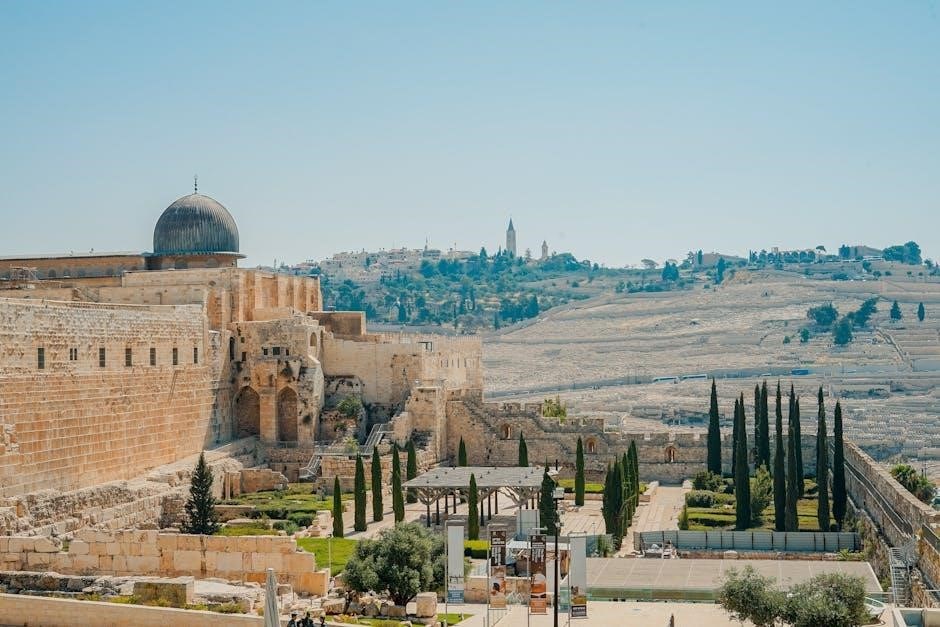
Joe Sacco’s Palestine offers a deeply humanizing portrayal of Palestinian life, moving beyond stereotypical representations often found in mainstream media. He meticulously depicts the everyday struggles of Palestinians living under Israeli occupation – the checkpoints, the curfews, the economic hardship, and the constant threat of violence. These aren’t presented as abstract political issues, but as lived realities impacting individuals and families.
Sacco focuses on the resilience and dignity of Palestinians in the face of adversity. He showcases their resourcefulness, their strong family bonds, and their unwavering commitment to their culture and identity. He portrays their humor, their hospitality, and their capacity for hope, even amidst despair. This nuanced depiction challenges simplistic narratives of victimhood or resistance.
The comic meticulously details the physical environment of the West Bank and Gaza, illustrating the impact of the occupation on the landscape and infrastructure. He shows the destruction of homes, the fragmentation of communities, and the psychological toll of living in a state of constant uncertainty. These visual representations are crucial to understanding the lived experience of Palestinians.
Importantly, Sacco doesn’t present a romanticized view of Palestinian life. He acknowledges internal divisions and complexities within Palestinian society, avoiding a monolithic portrayal. He presents a multifaceted picture, acknowledging both the suffering and the strength of the Palestinian people, fostering empathy and understanding.
Depiction of Israeli Perspectives
Joe Sacco’s Palestine doesn’t solely focus on Palestinian experiences; it also attempts to incorporate Israeli perspectives, though this aspect has been subject to considerable critical debate. While the narrative primarily centers on Palestinian voices, Sacco includes interactions with Israeli soldiers, settlers, and civilians, aiming for a more balanced, albeit complex, representation.
His portrayal of Israeli soldiers often depicts them as young, conflicted individuals carrying out orders within a system of occupation. He shows their anxieties, their boredom, and their occasional displays of empathy, but also their adherence to a rigid military protocol. This avoids demonizing individual soldiers while still critiquing the broader system they represent.
Sacco’s depiction of Israeli settlers is more critical, often highlighting their ideological motivations and their impact on Palestinian communities. He portrays their claims to the land as rooted in religious and political beliefs, and illustrates the displacement and dispossession experienced by Palestinians as a result of settlement expansion.
However, critics argue that the Israeli perspectives presented in Palestine are insufficient and often framed through a Palestinian lens. Some contend that Sacco doesn’t fully explore the historical and political context informing Israeli actions, leading to an imbalanced portrayal. Despite these criticisms, Sacco’s effort to include Israeli voices, however limited, distinguishes his work from purely one-sided accounts;
Critical Reception and Awards
Joe Sacco’s Palestine garnered widespread critical acclaim upon its release and continues to be lauded as a landmark achievement in graphic journalism. Critics praised Sacco’s innovative approach to reportage, his meticulous research, and his powerful storytelling. The work was hailed for its ability to humanize the Israeli-Palestinian conflict, moving beyond simplistic political narratives.
Many reviewers highlighted the book’s formal qualities, noting how Sacco’s distinctive artistic style – characterized by detailed linework and a gritty aesthetic – effectively conveyed the harsh realities of life in the West Bank and Gaza Strip. The comic book format itself was seen as a crucial element, allowing for a unique blend of journalistic investigation and personal narrative;
Palestine received numerous awards and accolades, solidifying Sacco’s reputation as a leading figure in the field. These include the American Book Award, the Eisner Award for Best Reportage, and the PEN/American Center Award for Literary Journalism. The book’s success helped to legitimize graphic novels as a serious form of journalism and literary expression.
Despite the overwhelmingly positive reception, some critics raised concerns about Sacco’s perspective and methodology, questioning the extent to which he could achieve objectivity in a highly charged political context. However, even these critiques acknowledged the book’s significant contribution to the understanding of the Israeli-Palestinian conflict and the power of comics as a medium for social commentary.
Controversies and Criticisms
Joe Sacco’s Palestine, while widely celebrated, hasn’t been without its share of controversy and criticism. A central debate revolves around the issue of authorial perspective and objectivity. Critics questioned whether Sacco, as an outsider, could truly represent the Palestinian experience without imposing his own biases.
Some Palestinian voices argued that the book, while sympathetic, still framed the narrative through a Western lens, potentially reinforcing existing power dynamics. Concerns were raised about the selection of interviewees and the emphasis placed on certain perspectives over others. The portrayal of Palestinian individuals, while aiming for nuance, was sometimes seen as perpetuating stereotypes.
Further criticism focused on Sacco’s self-reflexivity within the work. While some lauded his honesty about his own limitations as a journalist, others found it distracting or self-indulgent, arguing that it detracted from the stories of those he was documenting. The very act of profiting from the suffering of others was also a point of contention for some.
Additionally, the distribution of the Palestine PDF has sparked debate regarding copyright and ethical considerations. Unauthorized sharing raises questions about compensating Sacco for his work and potentially undermining future projects. Despite these criticisms, Palestine remains a significant and influential work, prompting ongoing discussions about the complexities of representing conflict and the responsibilities of journalists.
The Evolution of Sacco’s Style
Joe Sacco’s artistic and narrative style underwent a noticeable evolution, particularly evident when comparing his early work to Palestine and his subsequent projects. Initially, his comics displayed a more conventional, superhero-influenced aesthetic. However, with Palestine, Sacco deliberately moved away from these tropes, adopting a stark, black-and-white style that mirrored the harsh realities of the conflict he was documenting.
This stylistic shift wasn’t merely aesthetic; it was integral to his journalistic approach. The gritty, unpolished artwork conveyed a sense of immediacy and authenticity, rejecting the glamour often associated with comics. His panel layouts became more fragmented and experimental, reflecting the chaotic and disorienting nature of the situations he witnessed.
Following Palestine, Sacco continued to refine his technique, experimenting with different levels of detail and incorporating color in later works. He also became increasingly adept at portraying complex emotional states through subtle facial expressions and body language. The PDF versions of his work, while convenient for access, often lack the textural nuances of the printed editions.
His commitment to on-the-ground reporting consistently informed his stylistic choices. Sacco’s evolution demonstrates a dedication to finding the most effective visual language to convey the complexities of human experience and the ethical responsibilities of a graphic journalist. He consistently prioritized clarity and emotional resonance over stylistic flourishes.
Connections to Other Works by Joe Sacco
Joe Sacco’s Palestine isn’t an isolated achievement but rather a cornerstone within a broader body of work characterized by rigorous reporting and innovative storytelling. Examining his other graphic novels reveals recurring themes and stylistic approaches that resonate with his seminal work. For instance, Footsteps in the Desert, detailing his journey with a Bedouin tribe, shares Palestine’s commitment to immersive, first-person narrative and detailed observation of cultural nuances.
Similarly, Safe Area Gorazde, documenting the Bosnian War, employs a similar journalistic rigor and stark visual style, focusing on the everyday experiences of civilians caught in conflict. The PDF availability of these works allows for comparative analysis, highlighting Sacco’s consistent focus on marginalized voices and the human cost of war.
His shorter works, often published in magazines like The New Yorker, demonstrate his versatility and willingness to experiment with form. Pieces like “Chechen War” and his coverage of the Gaza tragedy (with Art Spiegelman) showcase his ability to distill complex events into concise, impactful narratives.
A key connection across Sacco’s oeuvre is his dedication to ethical representation. He consistently grapples with the challenges of portraying trauma and avoiding sensationalism. The PDF format, while facilitating wider access, doesn’t fully replicate the impact of experiencing these stories in their original, carefully crafted form.

Finding Reliable Sources for the PDF
Locating a legitimate PDF of Joe Sacco’s Palestine requires caution. Due to copyright restrictions, freely available PDFs are often of questionable legality and quality. Prioritizing ethical access is crucial; supporting the author and publisher ensures continued creation of impactful work.
Official sources, such as the publisher’s website (Fantagraphics Books), are the most reliable, though they typically offer the book for purchase rather than free PDF download. Digital comic platforms like ComiXology or Kindle often sell digital versions, providing a legal and convenient alternative. University libraries with extensive digital collections may also offer access to Palestine for registered students and faculty.
Beware of unofficial websites offering free PDFs. These sites frequently host malware or low-resolution scans. Torrent sites and file-sharing platforms pose significant legal and security risks. Always verify the source’s credibility before downloading any file.
Searching academic databases (JSTOR, ProQuest) might yield excerpts or scholarly articles discussing Palestine, potentially including scanned pages for illustrative purposes, but rarely the complete work. Remember that accessing a full, unauthorized PDF constitutes copyright infringement. Supporting the creator through legitimate channels is the most responsible approach.
Legal and Ethical Considerations of PDF Distribution
Distributing or downloading a PDF of Joe Sacco’s Palestine without proper authorization raises significant legal and ethical concerns. Copyright law protects the author and publisher’s exclusive rights to reproduce and distribute their work. Unauthorized PDF sharing constitutes copyright infringement, potentially leading to legal repercussions for both the distributor and downloader.
Ethically, accessing copyrighted material without payment devalues the creator’s labor and undermines the publishing industry. Palestine represents years of dedicated reporting and artistic effort; circumventing payment diminishes the financial viability of such important journalistic endeavors; Supporting Sacco and Fantagraphics through legitimate purchases allows them to continue producing impactful graphic journalism.
The proliferation of illegal PDFs also often results in lower-quality versions, lacking the fidelity of the original publication. This compromises the artistic integrity of Sacco’s work and the reader’s experience. Furthermore, downloading from untrusted sources exposes users to malware and viruses.
Fair use exceptions to copyright law are limited and generally do not cover the complete reproduction and distribution of a work like Palestine. Respecting intellectual property rights is paramount, and choosing legal avenues for accessing the book demonstrates support for both the creator and the principles of ethical consumption.
Further Research and Resources
For comprehensive information on Joe Sacco and Palestine, several resources are available. Fantagraphics Books, the publisher, offers details about the work and Sacco’s other publications on their official website: https://www.fantagraphics.com/. Academic databases like JSTOR and Project MUSE contain scholarly articles analyzing Palestine’s journalistic and artistic merits.
Exploring interviews with Sacco provides valuable insight into his methodology and perspectives. Numerous interviews are available online through platforms like The Comics Journal and various news outlets. Books focusing on graphic journalism, such as Hillary Chute’s “Graphic Women,” offer critical frameworks for understanding Sacco’s contribution to the field.
Websites dedicated to comics criticism, like The Beat (https://www.thebeat.com/) and Comics Alliance (now archived), feature reviews and analyses of Palestine. For information on the broader context of the First Intifada, consult historical sources and academic research on Palestinian history and the Israeli-Palestinian conflict.
While searching for a Palestine PDF, prioritize legal and ethical access; Consider purchasing the book through authorized retailers to support Sacco’s work. Remember that unauthorized distribution infringes on copyright and undermines the creator’s livelihood. Explore library resources for potential access to physical copies;