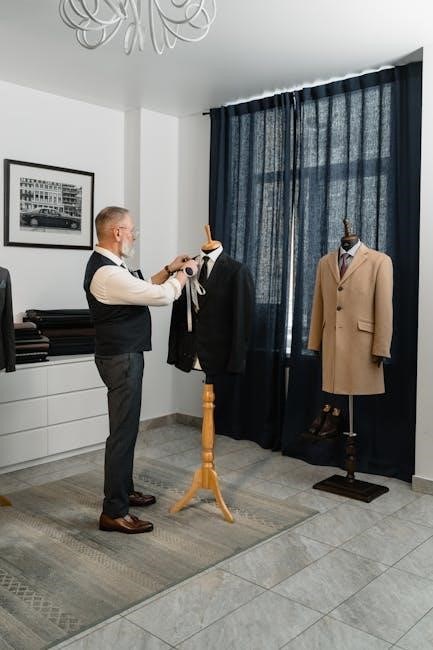
Navigating men’s coat fitting requires understanding proportions, body type, and occasion; a well-fitted coat elevates style and provides essential warmth, ensuring confidence.
Understanding Body Types for Coat Selection
Identifying your body type – athletic, slim, average, or larger – is crucial. Athletic builds benefit from structured coats, while slimmer frames suit tailored fits. Average builds have versatility, and larger builds require coats offering ample room without bulkiness. Consider shoulder width and chest circumference when choosing styles; proper balance enhances overall appearance and comfort.
Key Areas for a Proper Coat Fit
Focus on four critical areas: shoulders, chest, waist, and sleeves. Shoulders should lie flat, chest allow comfortable movement, and the waist should define shape without constriction. Sleeve length is vital – hitting at the wrist bone. A clean back silhouette, free of pulling or bunching, indicates a well-fitted coat.

Coat Length and Proportions
Coat length significantly impacts overall appearance; consider your height and body type for balanced proportions, ensuring a flattering and functional silhouette.
Standard Coat Lengths Explained
Generally, coats fall into three primary lengths: short, medium, and long. Short coats typically end at the waist, offering mobility and a modern look. Medium lengths, hitting mid-hip, are versatile for various styles. Longer overcoats, extending below the hip or to the knee, provide maximum warmth and a classic, formal aesthetic. Understanding these lengths is crucial for selecting a coat that complements your build and intended use.
Determining the Ideal Length for Your Height
For shorter individuals, shorter to medium lengths prevent overwhelming the frame, maintaining proportion. Taller men can confidently wear longer coats without appearing disproportionate, enhancing their stature. Consider where the coat hits your legs – ideally, it shouldn’t significantly shorten them. A balanced length creates a visually harmonious silhouette.
Shoulder Fit: The Most Crucial Aspect
A proper shoulder fit is paramount; the seam should align with your natural shoulder end, avoiding pulling or bunching for optimal comfort and appearance.
Checking for Shoulder Seam Alignment
To assess shoulder fit, observe where the coat’s shoulder seam falls relative to your own. Ideally, it should end precisely where your shoulder does – not extending past or falling short. A slight extension is preferable to a seam that digs in. Have a friend check from the back to ensure a smooth line, avoiding any puckering or tightness, which indicates a poor fit and restricts movement.
Understanding Shoulder Slope and Padding
Shoulder slope impacts how a coat drapes; a natural slope mirrors your own physique for comfort. Padding adds structure and shape – minimal padding suits leaner builds, while more padding balances broader chests. Examine how the coat’s shoulder construction complements your body, ensuring a clean silhouette and unrestricted arm movement.
Chest and Waist Fit
A proper chest fit allows comfortable movement, avoiding tightness or gaping; waist shaping defines the silhouette, utilizing darts for a tailored appearance and flattering form.
Assessing Chest Circumference and Fit
Measuring chest circumference is crucial; ensure the coat buttons comfortably without strain, allowing room for layering underneath. The coat’s shoulder seams should lie flat, not pull or bunch. A snug, but not tight, fit across the chest indicates a good starting point. Check for adequate mobility – you should be able to move your arms freely without feeling restricted. Avoid excessive fabric or a boxy appearance, as this suggests a poor fit.
The Role of Darting and Shaping
Darting and shaping are essential for achieving a tailored silhouette. These techniques refine the coat’s fit, contouring to the body’s natural curves. They minimize excess fabric, preventing a boxy look and enhancing the overall aesthetic. Properly placed darts create a more defined waist and a flattering shape, improving both comfort and style.

Sleeve Fit and Length
Proper sleeve fit balances comfort and style; sleeves should allow movement without excessive bunching, revealing a hint of shirt cuff for a polished appearance.
Proper Sleeve Pitch and Length
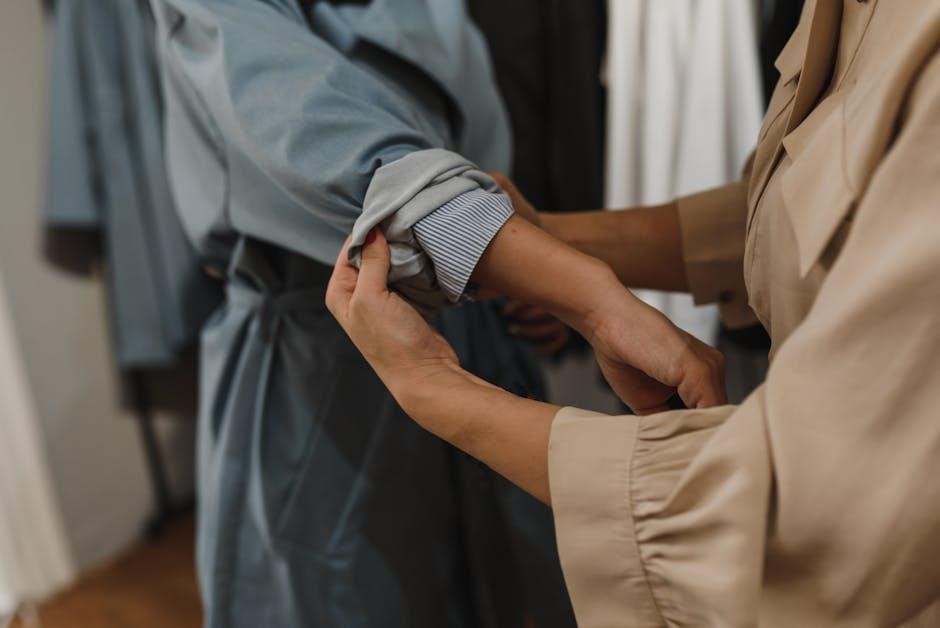
Sleeve pitch, the angle of the sleeve, is crucial for unrestricted movement; a natural drape avoids constriction. Length-wise, sleeves should end roughly where your wrist meets your hand, allowing about half an inch of shirt cuff to be visible. Too short looks awkward, while too long obscures the hand and risks dragging.
Checking for Cuff Visibility
Ideally, approximately half an inch of your shirt cuff should peek out from beneath the coat sleeve – a subtle detail signifying a proper fit. This balance showcases your style while maintaining a polished appearance. Too much cuff suggests a sleeve that’s too short, while none indicates excessive length needing alteration.
Back Fit and Movement
A clean back silhouette is crucial; the coat should follow your natural shape without pulling or bunching, allowing a full range of motion for comfort.
Ensuring a Clean Back Silhouette
Observe the coat’s back when moving – it shouldn’t wrinkle excessively across the shoulders or pull away from the body. A smooth, streamlined appearance indicates a proper fit, allowing for comfortable arm movement. Check for any gaping at the button closure, which suggests the back is too wide. Ideally, the coat should gently contour to your back’s natural shape, avoiding a boxy or overly fitted look.
Testing Range of Motion
Simulate everyday movements – reach forward, raise your arms, and rotate your torso – while wearing the coat. Ensure it doesn’t restrict your natural range of motion or feel constricting. The coat should move with you, not against you. Limited mobility signals a fit issue, potentially requiring adjustments for optimal comfort and functionality.
Collar Fit and Style
A properly fitted collar should comfortably accommodate a shirt or sweater, framing the face without gaping or choking; style complements face shape.
Collar Height and Width Considerations
Collar height impacts formality; higher collars are more traditional, while lower ones offer a modern aesthetic. Width should balance face shape – wider collars suit broader faces, narrower ones, slimmer features. Consider how the collar interacts with shirts and ties, ensuring sufficient space and a clean silhouette. A well-proportioned collar enhances overall coat appearance.
Matching Collar Style to Face Shape
For round faces, point collars add length, while square faces benefit from softer, rounded collars. Longer faces suit lower-profile collars, avoiding excessive elongation. A wider spread collar complements strong jaws, and button-down collars work well with most shapes. Prioritize balance and proportion for a flattering look.

Understanding Different Coat Styles & Their Fit
Various coat styles—overcoats, pea coats, topcoats—demand unique fits; slim cuts offer a modern silhouette, while classic fits prioritize comfort and layering potential.
Overcoat Fit Variations (Classic, Slim, Modern)
Classic overcoats offer a relaxed, timeless silhouette with ample room for layering, ideal for formal settings. Slim-fit overcoats provide a more tailored, contemporary look, hugging the body closely. Modern fits strike a balance, offering a defined shape without restricting movement, suitable for versatile styling; consider your build and desired aesthetic when selecting the optimal variation.
Pea Coat & Topcoat Specific Fitting Points
Pea coats should allow comfortable movement in the arms and shoulders, with a defined waist for a flattering shape; length typically hits mid-hip. Topcoats prioritize a longer length, often reaching the knee, and a relaxed fit accommodating suits; ensure shoulder seams lie flat and the collar sits neatly.

Common Fitting Mistakes to Avoid
Ignoring shoulder fit, sleeve length, or a too-tight chest are frequent errors; prioritize a clean silhouette and full range of motion for optimal style.
Shoulders Too Wide or Narrow
Incorrect shoulder fit dramatically impacts a coat’s appearance. Too wide creates a boxy look, while too narrow restricts movement and appears strained. The shoulder seam should align with your natural shoulder end. Padding influences fit; ensure it complements your build, not exaggerates it; A tailor can expertly adjust shoulder width for a refined silhouette, crucial for overall coat harmony.
Sleeves That Are Too Long or Short
Proper sleeve length is vital for a polished look. Sleeves too long cover hands, hindering movement, while too short expose wrists, appearing disproportionate. Aim for approximately ½ to 1 inch of shirt cuff visibility. Consider sleeve pitch – the angle – for comfortable arm movement. Tailoring sleeve length is a common, cost-effective alteration.
Alterations: Tailoring for a Perfect Fit
Professional tailoring refines a coat’s fit; common adjustments include sleeve length, waist suppression, and shoulder adjustments, ensuring a personalized and flattering silhouette.
Common Alterations (Sleeve Length, Waist Suppression)
Sleeve length is frequently adjusted for optimal cuff visibility, typically showing ½ inch of shirt cuff; waist suppression creates a more defined silhouette, removing excess fabric. Shoulder adjustments, though more complex, refine the fit across the back. Hemming the coat or adjusting the collar are also possible, though less common, alterations to consider for a truly bespoke fit.
Finding a Reputable Tailor
Seek recommendations from trusted sources, reviewing online portfolios and testimonials. A skilled tailor will offer expert advice, precise measurements, and transparent pricing. Communication is key; clearly articulate your desired fit. Avoid tailors who suggest drastic alterations or seem unwilling to listen to your preferences – a good fit requires collaboration.
Materials and Their Impact on Fit
Fabric weight significantly influences a coat’s drape and structure; stretch fabrics offer comfort and flexibility, while heavier materials provide a more defined silhouette.
How Fabric Weight Affects Fit
Heavier fabrics, like wool and cashmere, naturally have more structure, offering a sharper, more defined fit – ideal for formal overcoats. Lighter materials, such as cotton or linen blends, drape more softly, creating a relaxed silhouette suitable for casual wear. Consider how the fabric’s weight impacts the overall shape and how it complements your body type for optimal comfort and style.
Stretch Fabrics and Comfort
Incorporating stretch fabrics – like those with elastane or spandex – into coat construction significantly enhances comfort and range of motion. These blends allow for a closer fit without feeling restrictive, crucial for active lifestyles. They also improve the coat’s ability to move with you, preventing bunching and ensuring a streamlined appearance.
Fit Considerations for Different Occasions
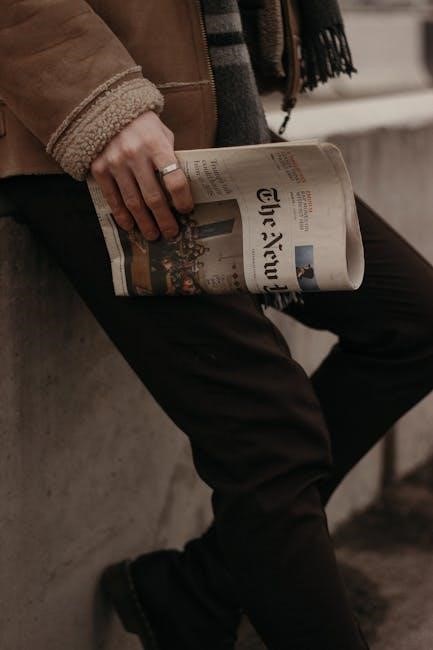
Coat fit should adapt to the event; business demands a tailored, structured silhouette, while casual settings allow for relaxed fits and versatile styling options.
Business vs. Casual Coat Fit
For professional settings, prioritize a structured coat – think classic overcoats or tailored topcoats – with a defined shoulder line and a closer fit through the body. Neutral colors like navy, charcoal, or camel are ideal. Casual environments offer more flexibility; pea coats, bomber jackets, or even relaxed-fit overcoats work well, allowing for layering and a more comfortable, less restrictive silhouette. Focus on practicality and personal style.
Formal Event Coat Fit
At formal events, a full-length overcoat is typically expected, ideally in black or a very dark shade. The fit should be impeccable – close-fitting but allowing for comfortable movement and layering over a suit or tuxedo. Ensure the coat’s length complements your height and the formality of the occasion, projecting sophistication and elegance.
Budget-Friendly Fitting Tips
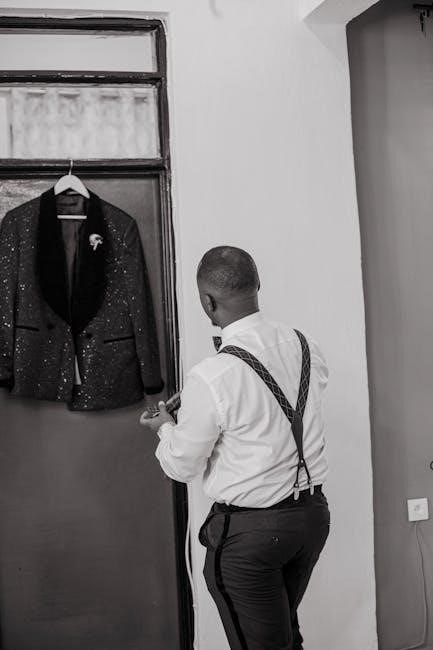
Accurate self-measurement and utilizing online size guides are cost-effective ways to find a well-fitting coat without expensive tailoring services initially.
Measuring Yourself Accurately
For precise coat sizing, employ a flexible measuring tape and ideally, have a friend assist. Measure chest circumference at the fullest point, waist at the natural waistline, and sleeve length from shoulder to wrist. Shoulder width, from seam to seam, is also crucial. Record all measurements carefully, as variations impact fit significantly; double-check for accuracy!
Utilizing Online Size Guides
Most retailers provide detailed size charts; however, these can vary significantly between brands. Compare your measurements to the specific guide for each coat. Pay attention to whether the chart requests actual body measurements or garment measurements. Read reviews – others often comment on sizing accuracy, offering valuable insights before purchasing.

Seasonal Fit Adjustments
Consider layering when selecting a coat for colder months; ensure sufficient room for bulky knits without compromising the overall silhouette or restricting movement.
Layering and Coat Fit
Proper coat fit must accommodate layering for varying temperatures. When trying on coats, wear a typical mid-layer – a sweater or light jacket – to assess the fit accurately. Ensure the coat doesn’t feel restrictive when layered, allowing for comfortable arm movement and avoiding a strained appearance. A slightly looser fit is preferable to a tight one when anticipating layers.
Adjusting for Winter Bulky Knits
During colder months, bulky knitwear necessitates a coat fit adjustment. Prioritize shoulder and chest room; the coat shouldn’t pull or strain when wearing thick sweaters. Consider a size up if needed, focusing on comfort and mobility. Sleeve length remains crucial – ensure sufficient coverage even with layered arms, avoiding a constricted feel.
Coat Care to Maintain Fit
Proper storage and professional cleaning preserve a coat’s shape and fit. Avoid overcrowding closets and utilize garment bags for optimal longevity and style.
Proper Storage Techniques
To maintain your coat’s shape and fit during off-season, utilize broad, shaped hangers to support the shoulders. Avoid wire hangers, which can cause distortion. Garment bags protect from dust and moths, while allowing breathability. Ensure adequate space in your closet; overcrowding leads to wrinkles and compression. Regularly air out coats before storing to prevent mildew.
Professional Cleaning Recommendations
For optimal coat care, professional dry cleaning is recommended once or twice per season, depending on wear. Always check the garment’s care label for specific instructions. Communicate any stains or damage to the cleaner. Avoid frequent cleaning, as it can degrade fabrics. Proper cleaning preserves the coat’s shape and extends its lifespan.
Resources for Finding Well-Fitting Coats
Explore brands known for quality fit and detailed size charts online; retailers offering virtual try-ons or generous return policies are invaluable for finding the perfect coat.
Recommended Brands Known for Good Fit
Several brands consistently receive praise for their coat fit and construction. Mackintosh excels in classic raincoats, offering timeless style and precise tailoring. Crombie is renowned for its sophisticated overcoats, prioritizing a refined silhouette. For modern fits, consider Reiss or Suitsupply, known for contemporary designs and adjustable features. Finally, Canada Goose provides exceptional warmth with thoughtfully designed cuts.
Online Retailers with Detailed Size Charts
Finding the right fit online hinges on comprehensive size charts. Mr Porter provides extensive measurements and fit guides for each coat. Nordstrom offers detailed size recommendations and customer reviews aiding selection. ASOS includes helpful size advice and virtual try-on features. End Clothing showcases precise garment dimensions, while Everlane prioritizes transparent sizing information.